
 WhatsApp:
  Email:
Propeller selection guide
Propeller Diameter vs Pitch: What’s the Difference and Which One Should You Change?
Direct answer: Diameter is the width of the circle made by the blade tips. Pitch is the theoretical distance a propeller would move forward in one revolution. When a compatible propeller is already fitted, pitch is usually the first measurement reviewed to correct wide-open-throttle RPM. Diameter should normally follow the propeller family and engine application rather than be changed by itself.
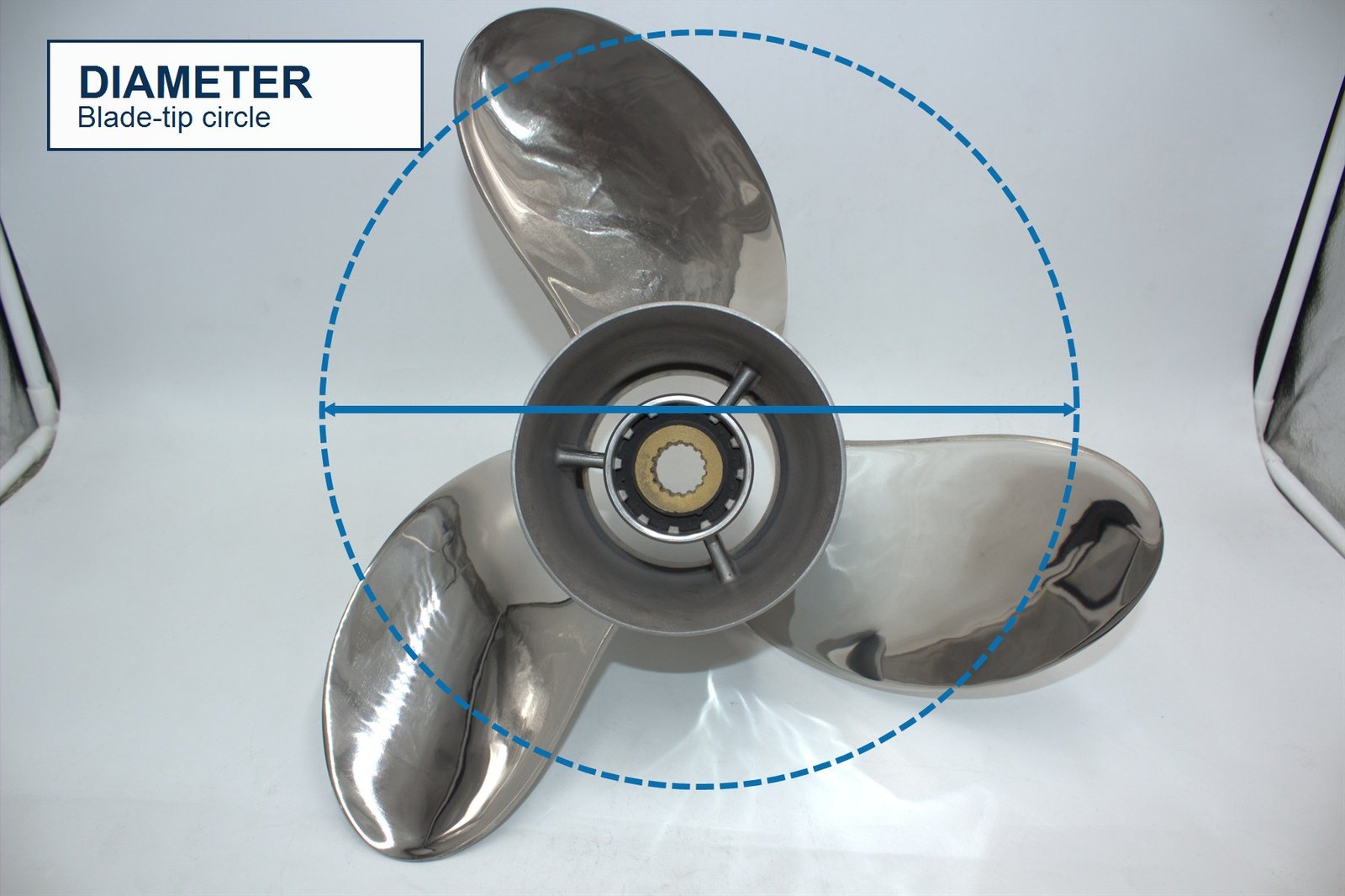
What Is Propeller Diameter?
Propeller diameter is measured across the full circle swept by the blade tips. In a size such as 14 × 19, 14 inches is the diameter and 19 inches is the pitch. If you only need help finding those numbers on the propeller, use our propeller size and marking guide.
Diameter affects how much water the propeller can engage, but it is not a simple “larger is better” setting. Gearcase clearance, blade area, blade count, engine power, gear ratio and operating RPM all influence the diameter selected for a propeller design. Two compatible propeller models can therefore use slightly different diameters even at the same pitch.
What Is Propeller Pitch?
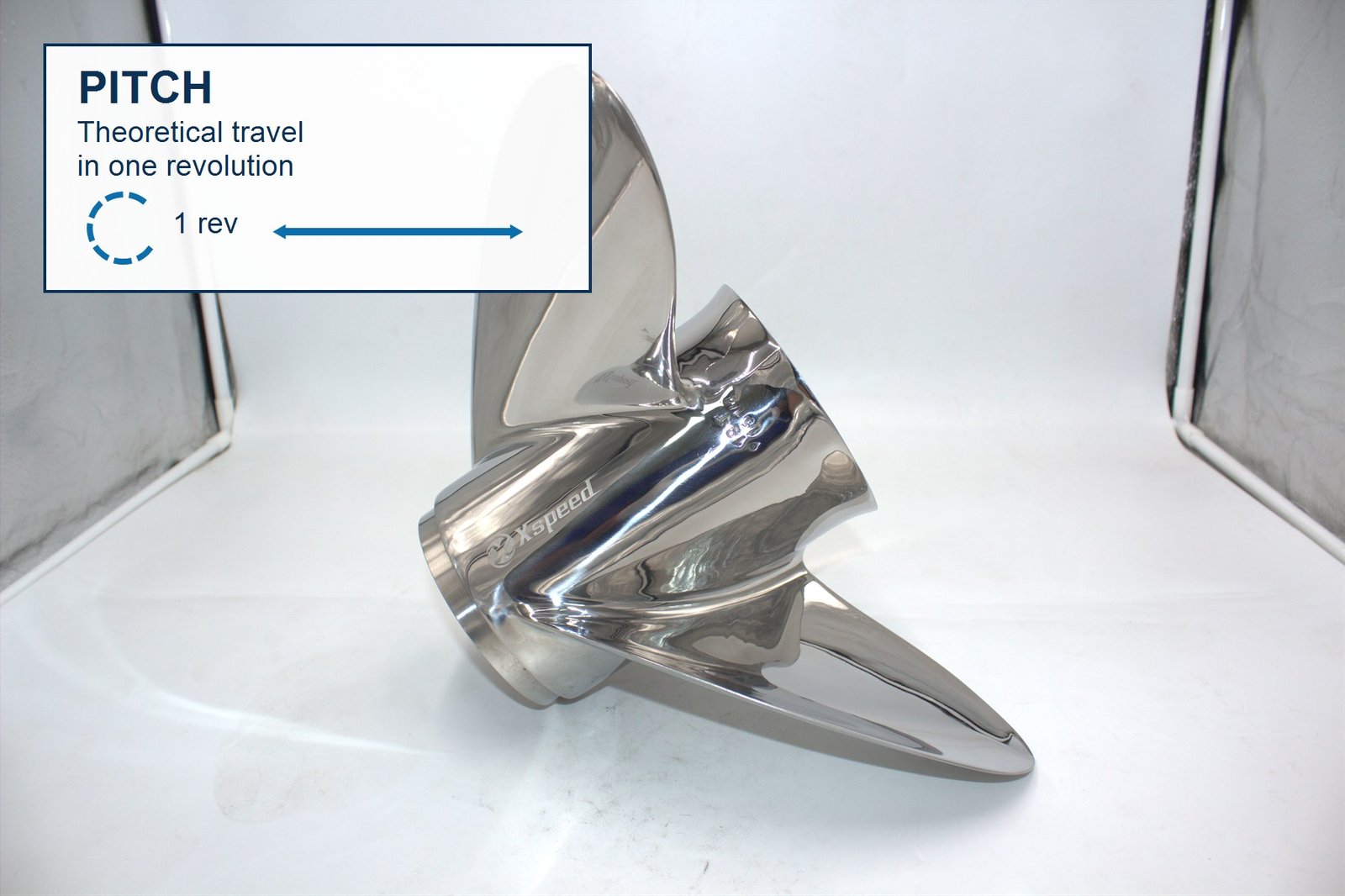
Pitch is the theoretical forward distance of one propeller revolution in a solid medium. A 19-inch-pitch propeller would theoretically advance 19 inches per revolution. Water is not solid, so the boat travels less than that theoretical distance because of propeller slip and other losses.
Propeller Diameter vs Pitch: Side by Side
| Measurement | What it describes | What it commonly influences | How to use it |
|---|---|---|---|
| Diameter | Width of the blade-tip circle | Water engagement, blade clearance and load capacity | Follow the compatible propeller model and engine application |
| Pitch | Theoretical travel per revolution | Engine load, acceleration and WOT RPM | Compare pitches within a confirmed fitment and test on the water |
How Pitch Affects WOT RPM
All else being equal, more pitch adds load and generally lowers wide-open-throttle RPM; less pitch generally raises WOT RPM. That is why pitch is often compared to gearing. A higher-pitch propeller is not automatically faster, and a lower-pitch propeller is not automatically better for acceleration. The engine must still reach its manufacturer-specified WOT range with the boat’s normal load.
There is no universal rule that one inch of pitch always changes RPM by a fixed amount. Blade shape, cup, rake, diameter, material, engine setup, hull and load can all change the result. The relationship should be treated as a direction for testing, not a guaranteed formula. Mercury’s technical explanation of diameter and pitch likewise recommends on-water testing after a propeller change.
Which Measurement Should You Change?
-
WOT RPM is below the specified range
After checking engine condition, trim, mounting height and load, review a lower pitch within the same compatible propeller family.
-
WOT RPM is above the specified range
Review a higher pitch within the same compatible family, provided acceleration and normal-load performance remain acceptable.
-
You are changing blade count or propeller model
Do not copy pitch alone. Diameter, blade area, cup and rake may also change, so compare the complete design.
-
The propeller touches or lacks clearance
Stop. Confirm the correct gearcase application and maximum permitted diameter before operating the engine.
In practical selection, diameter is usually chosen by the propeller design and engine application, while pitch is the more common tuning comparison. Suzuki’s propeller selection guidance also emphasizes evaluating the complete propeller and matching it to the motor.
Do not choose by horsepower alone. Confirm engine model and year, gearcase, shaft spline, rotation, hub system, current propeller marking, normal boat load and the engine’s specified WOT RPM range. A size that fits one outboard may not fit another engine with the same horsepower.
A Simple On-water Test
- Record the current setup. Note diameter, pitch, material, blade count and hub system.
- Use the normal load. Keep passengers, fuel, gear and trim method consistent.
- Warm the engine. Follow the engine manufacturer’s operating instructions.
- Record WOT RPM and GPS speed. Test only where conditions and local rules make it safe.
- Compare acceleration and handling. Watch for ventilation, vibration or poor control.
- Reinspect the installation. Follow the correct torque and locking-hardware procedure in the engine manual.
Before the test, review our outboard propeller installation guide. If your propeller uses a separate hub kit, the interchangeable hub guide explains why hub-system compatibility must be confirmed separately.
Need Help Comparing Propeller Sizes?
Send the engine model and year, current propeller marking, WOT RPM, boat type and normal load. Xspeed can help narrow the compatible options before you test.
Frequently Asked Questions
Is propeller diameter or pitch more important?
Both matter. Diameter is tied closely to the propeller design and engine application, while pitch is more commonly compared when adjusting WOT RPM within a confirmed fitment.
Does a higher-pitch propeller always make a boat faster?
No. Too much pitch can prevent the engine from reaching its specified WOT RPM range and can reduce acceleration. The result depends on the complete boat-and-engine setup.
Can two propellers have the same pitch but different diameters?
Yes. Different propeller families, blade counts and intended applications can use different diameters at the same pitch.
How do I know if the pitch is correct?
Test the boat at its normal load and confirm that WOT RPM remains inside the range specified by the engine manufacturer, while acceleration and handling remain suitable.