
 WhatsApp:
  Email:
How to Read Propeller Size and Markings
Direct answer: The general propeller size format is diameter × pitch. In 13 1/4 × 17, 13 1/4 inches is the diameter and 17 inches is the pitch. A Yamaha propeller may add a series letter such as K, but K is a Yamaha-specific series/application code, not a universal propeller marking. The stamped size still does not confirm shaft, hub or engine fitment by itself.
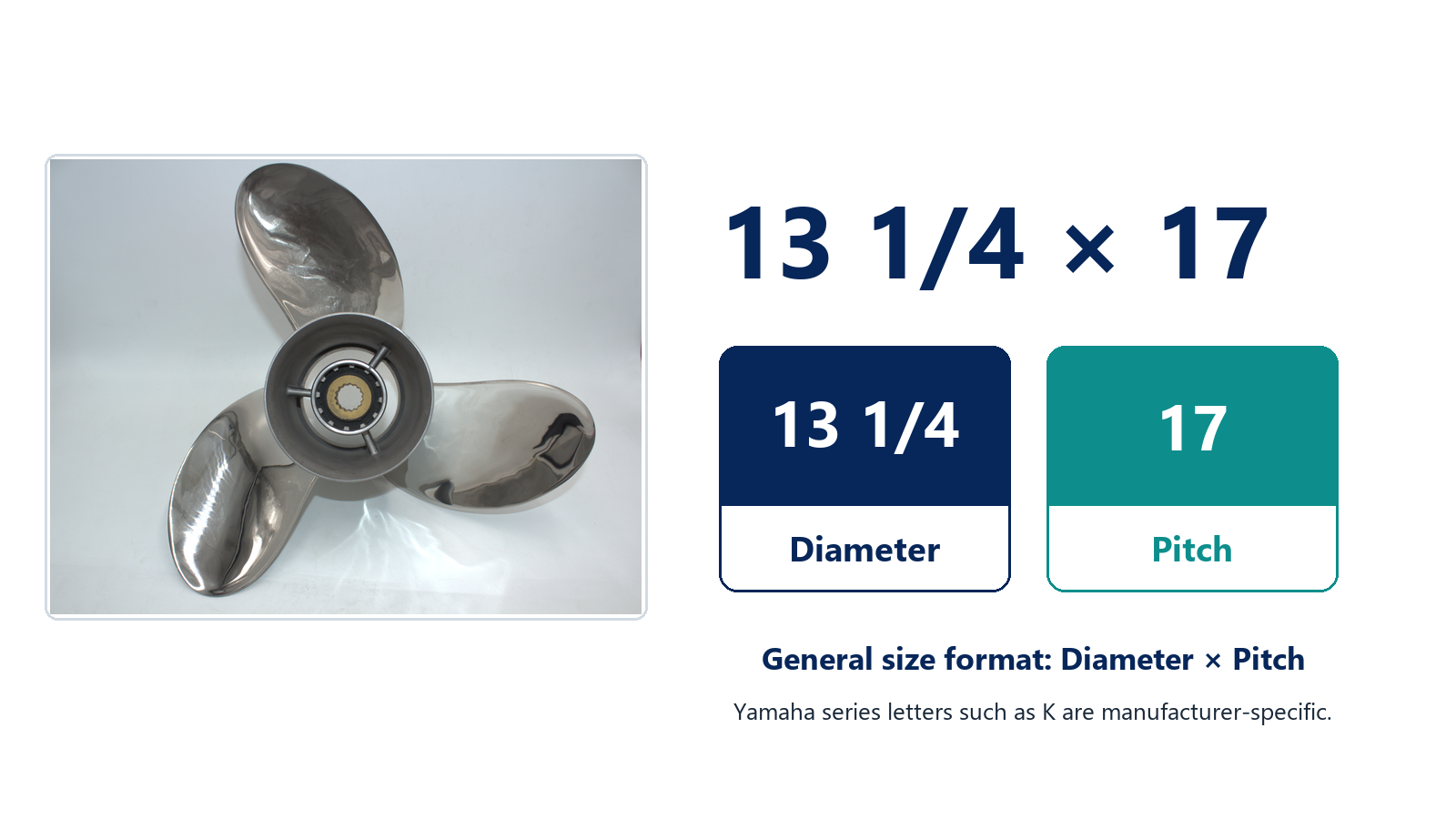
What Each Part of the Marking Means
| Example | Meaning | How to use it |
|---|---|---|
| 13 1/4 | Diameter in inches | Compare it with the specified diameter range for the gearcase and propeller family. |
| 17 | Pitch in inches | Use it with full-throttle RPM and normal boat load when evaluating performance. |
Mercury's propeller guidance confirms that a marking such as 14 × 19 lists diameter first and pitch second. Yamaha uses letter marks to identify a propeller series and its application range. Because code systems differ, do not transfer a Yamaha letter meaning to Mercury, Suzuki, Honda or another brand.
For a detailed Yamaha example, see what the K code means on a Yamaha propeller.
Where to Find the Numbers
Check the hub or barrel, the side or end of the hub, and the blade-root area. The full size may be stamped, cast, or laser-marked in one location, while a part number appears elsewhere. Clean dirt or oxidation with a non-abrasive cloth, then photograph every visible character before removing the propeller. Marking positions vary, so inspect both sides.
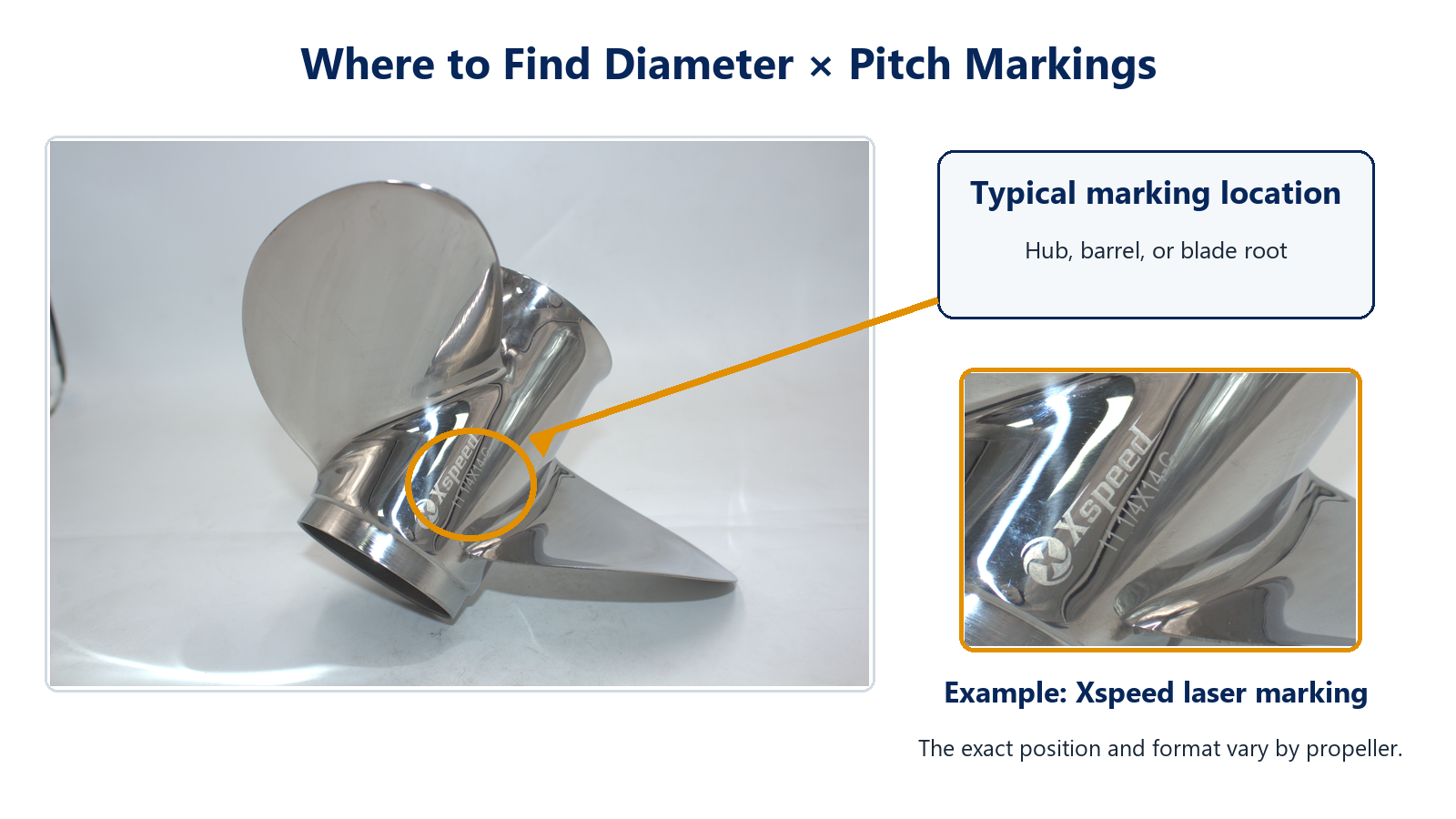
What the Stamp Cannot Confirm
A size code describes the propeller, not the complete installation. Verify these items before ordering a replacement:
- Engine identity: model, year and serial range.
- Gearcase: case size and compatible diameter range.
- Propeller shaft: spline count and shaft dimensions.
- Rotation: right-hand or left-hand, especially on twin installations.
- Hub system: pressed-in or interchangeable hub and required hardware.
- Blade design: blade count, material and intended operating use.
Fitment warning: Two propellers can share the same diameter and pitch yet use different splines, hubs, rotation or hardware. Matching only the stamped size can result in a part that will not install correctly.
How Pitch Relates to Engine RPM
Pitch is the theoretical forward distance traveled in one revolution, before slip is considered. It affects engine load, so the final choice should keep the outboard within its manufacturer-specified wide-open-throttle RPM range under the boat's normal load. Mercury notes that increasing pitch generally lowers WOT RPM, while decreasing pitch raises it. Treat that relationship as tuning guidance, not a fixed RPM formula for every boat.
After a size or design change, test with the usual fuel, passengers and equipment. Stop and review the selection if the engine falls outside its specified operating range.
Record the test load, fuel level, water conditions, engine trim and measured RPM. Comparable notes help a dealer separate a propeller-size issue from a loading or setup change, and they make a later replacement easier to cross-reference.
A Short Replacement Checklist
- Photograph the old propeller's size, code and part number.
- Record the outboard model, year and current WOT RPM.
- Confirm gearcase, spline count, rotation and hub hardware.
- Compare the replacement's complete specification, not only pitch.
- Recheck WOT RPM after installation under a representative load.
Check a Propeller Before Ordering
Use the Finder for a first-pass match. If the stamp is unclear, send Xspeed a photo of the propeller marking and engine identification plate.
Frequently Asked Questions
Is the first propeller number diameter or pitch?
In a conventional size such as 13 1/4 × 17, the first number is diameter and the second is pitch, both in inches.
Does a letter identify the propeller material?
No. On Yamaha propellers, letters such as K identify a Yamaha series or application group; they do not identify material. Other manufacturers may omit a series letter or use letters for a different purpose, so follow that manufacturer's documentation.
Can I replace a propeller using only the stamped size?
No. Also confirm the engine application, gearcase, spline, rotation, hub system and hardware.
Official References
- Mercury Marine: Propeller Diameter and Pitch
- Yamaha Outboards: Propeller FAQs
- Suzuki Marine owner's manual: rotation marks and propeller selection
Manufacturer names and trademarks belong to their respective owners. Xspeed products are aftermarket replacement products, not genuine OEM parts. Compatibility information is for cross-reference and must be verified against the engine and installation specifications.